Categories
Business tips Cash Finance Function Gym

Zero to Hero

From Zero To Hero Event

Learn how to be wildly profitable with ease even if you’re a newbie! We help you to go from zero to hero!

What you’ll get from this event

For attending From Zero To Hero live online

This is an unprecedented event for the health & wellness industry, with 13 top expert speakers offering you leadership & advice on marketing, sales & mindset to help lead you into the future – all on one single platform, for 1 entire day, 100% FREE!

This online event is perfect for anyone who’s a fitness, health and wellness professional, gym, studio or health club owner – with a brand new or existing business.

Book on here: Zero to Hero event

The presentations

Landing corporate clients for your health & wellness business

What cashflow means for fitness businesses

You’ll learn why cashflow is important for your business growth and survival. By the end of the presentation, Debbie will teach you how to create a cashflow forecast for your business.
3 ways to use client feedback to write copy that sells

In a jam-packed industry like health and fitness, it can be hard to stand out. You’ll learn from Louise how to ask for glowing client feedback and use that to craft a killer brand message and turn that into a persuasive copy that sells.
How to get stuff done and reduce stress

You’ll learn from Isi tips and strategies to get more done in less time. Her advice revolves around overcoming procrastination and staying focussed for longer. So you’ll start to see what it feels like to get more done and be less stressed and less exhausted after a long working day.

Building professional networks online and at events

Shamshad will help you to get a better understanding of different types of networking events and how to prepare for these so they use your time effectively. By the end of her training session, you’ll know how to write an elevator pitch for your business and build meaningful networks.

Automation made simple

You’ll learn a lot from Yvonne about what is possible by using Zapier to automate your business. By using templates and training videos you can have a go at implementing simple steps to save time. You’ll know how to map out your workflow.
Amplify your social media

From Minessa you’ll learn 3 Facebook and social media tactics that won’t take much time but will amplify your voice online so that you can do less and make more. You’ll be able to create content that attracts your tribe and clients.
Coping with toxic stress

You’ll learn from Jaque how to navigate through high stress times, just like this Covid situation and be able overcome these mentally exhausting problems. You’ll be able to embrace self-empowerment, which is pretty much needed.

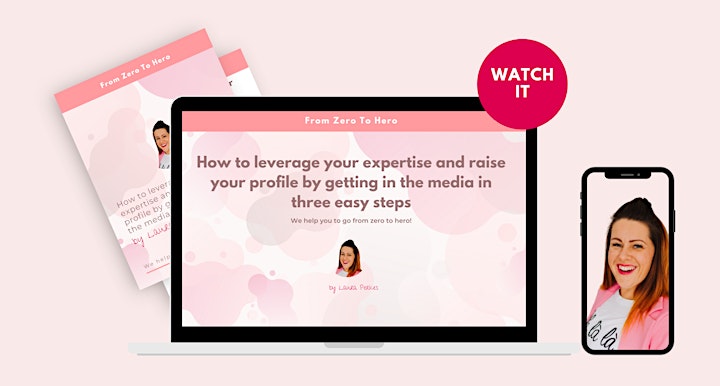
How to leverage your expertise and raise your profile by getting in the media in three easy steps

Laura will share with you PR 101: going back to basics and busting a few well-known PR myths. You’ll learn about how to find opportunities so that you’re able to increase visibility and share your message on a larger scale. She’ll also share her top 3 tips on how to get yourself featured in the press.
How to earn more, without doing more

Gemma will show how a website can earn you money by implementing some simple steps. You’ll learn 5 proven methods of increasing conversions through your website and she’ll also share best practices to help get you that ROI from your time or money invested in the website.

How to influence people with high-quality visuals and effective positioning

You’ll learn about how design can help you with building authority and what’s the importance of positioning. Mehar will give you actionable steps, so you’ll know how to influence people with your visuals on social media. She’ll help you with effective postitioning on Instagram.

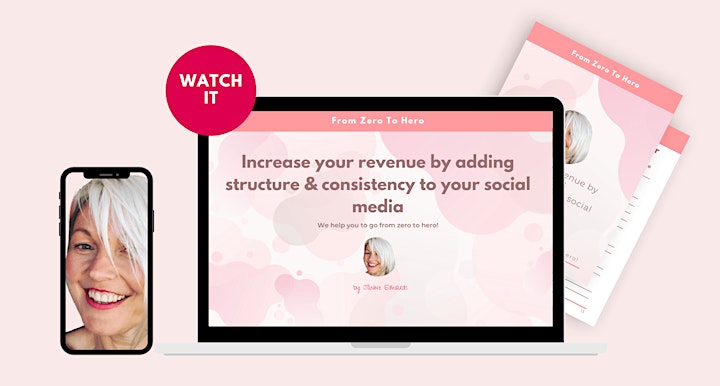
Increase your revenue by adding structure & consistency to your social media

You’ll learn from Janine about the tools you can use to increase your online presence and revenue, by adding structure and consistency to your social media platforms.
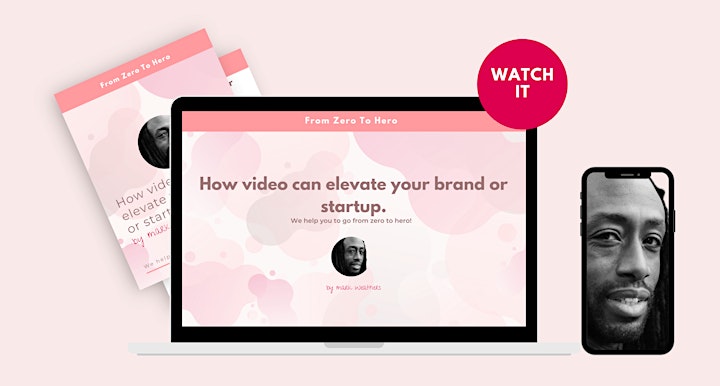
How video can elevate your brand or startup

Mark will take you through how video is an essential part of many brands marketing strategy today and how it should be a part of yours. You’ll learn about how you can create for your business and how to execute a plan for a video. You’ll have a greater understanding of video, the kinds of video you can have made for your business and how it greatly benefit your business.
NO this is NOT some big pitch fest online seminar. This is in-fact a LIVE training event with 13 TOP EXPERTS!

And you can have access to it from the comfort of your own home!

Meaning…

NO long hours travelling & NO spending money on hotels

You’ve just got to show up at your computer or smart device ready to grow & learn!

This will be different from all other online events you’ve ever attended so far! No FLUFF, no HYPE just straight to the point strategies around marketing, sales and mindset. So, it’s perfect for anyone who’s a fitness, health and wellness professional, gym, studio or health club owner – with a brand new or existing business!

Who is this event for?

  • health and wellness professionals who truly want to help people to live happier and healthier lives
  • fitness professionals who desire to make a much bigger impact
  • studios, gyms and health clubs who have and are struggling because of the pandemic
  • trainers, coaches and instructors who have and are struggling to get clients consistently
  • sports recreational businesses who want a structure and guidance
  • those who have and are struggling to get their message out to the people who really need help
  • those who are passionate about helping others, making a change, but have secretly been struggling to build a successful health, fitness or wellness business

How much will “not attending” cost?

Think about the average monthly income of a personal trainer over the past 12 months…

Let’s say their average income was £1,500 and that’s generous because the average salary of a personal trainer in the UK is £19,601…

So their goal is £10,000 per month through their business because they don’t want to be broke all the time…

That means they have a shortfall of £8,500 every single month…

So, basically, they lose £8,500 every single month because they don’t know how to get from zero to hero…

And that’s a staggering £102,000 opportunity cost per year…

Hosted by Viktoria Thorbjorn

The speakers

  • Debbie Hancock, Southbourne Accountancy
  • Miriam Gilbert, Founder & CEO ImpactfulnessLab
  • Louise Shanahan , Health Copywriter and Director, The Copy Prescription
  • Shamshad Walker , Marketing Consultant
  • Isi Dixon , Productivity Expert
  • Gemma Murphy , Website Architect
  • Janine Edwards , Founder of Media Pimps Marketing & PR
  • Mehar Lebana , Graphic Designer
  • Yvonne Hemmings , Automation Made Simple
  • Minessa Konecky , Direct To Success
  • Jaque Hanson , Bee Present Wellness
  • Laura Perkes , PR with Perkes
  • Mark Weathers , Mark Weathers Creative

free online event

Discover how to be wildly profitable with ease even if you’re a newbie during the pandemic!

Get your online event ticket 100% FREE

This is truly a once in a lifetime opportunity!

Claim your FREE ticket, valued at £1,999. Hurry – before there are no seats left!

So why do we give away this for free?

Obviously, we won’t get rich by this, so here’s the real reason;

2020 has been a horrible year for everyone and our industry got hit by the covid truck and this has caused severe damage.

It is kind of a ‘hit and run’ case.

And this industry is the one responsible for peoples’ health and wellbeing before the NHS jumps in.

We’re the first line of defence or prevention if you like.

If we fall, others will follow us. And we can’t afford that…

From here, you have 2 options

Either do nothing and continue to struggle and fear that covid will further affect your business and your financial situation…

Or make a conscious decision and invest your time in the ‘from Zero to Hero’ live online event and follow a different path.

Nothing changes if YOU don’t change. It’s up to YOU and on YOU.

Book on here: Zero to Hero event

2. Download our free guide on “7 mistakes to avoid – to stop your fitness business running out of cash” https://debbiebaileymoney.co.uk//fitness-ebook/ 

3. Book onto the free event: Book here

4. Connect with me on social media: 

Categories
Business tips Insuranace

What is Key Person Insurance?

WHAT IS KEY PERSON INSURANCE? 

Key Person Insurance is a form of commercial insurance which protects businesses against the financial loss it would suffer if a person considered a vital cog in their business died or was diagnosed with a critical illness.  


It is to ensure business continuity and succession planning, something overlooked by many business owners, particularly when the company is small. It pays out a lump sum upon the staff member’s death or in the event of a terminal diagnosis (if critical illness is included). 


It makes sure that if you lose a key figure in your business, that it has the smallest possible impact on the day to day running and success of the company.  


WHO IS A KEY PERSON? 

Key people are individuals whose skills, knowledge, experience or leadership are vital to a business’ continued financial success; they have a direct impact on the business’s profits. Often there is not just one key person but several. The important thing is to consider whether the business could continue if that person died and how much it would cost to replace them. 

Examples of a key person include, but are not limited to: 

  • Business Owner 

  • Sales Director 

  • IT Specialist 

  • Managing Director 

  • Specialise skill or expertise 

  • Head of Product Development 


BENEFITS OF KEY BUSINESS INSURANCE: 

Key Person Cover can help protect against the following business risks: 


Profits protected 

While your employee is receiving treatment for their illness or you are waiting to complete the recruitment process to replace a member of staff who has passed away, key person insurance will ensure you do not feel the effects of a potential drop-in profits and sales. 


Recruitment Cost covered 

Recruitment can be a time-consuming and costly exercise, there are costs associated with finding the right persona and with training a new employee. Key Person Insurance covers these costs in the event of your business losing a key member of staff to sickness or death. No business wants to be spending in excess to replace their staff as this could have a negative impact on their bottom line.  

A report by Oxford University, concluded that the cost of replacing an ordinary employee is more than £30,000. This amount covers the recruitment and training expenses, lost time, and output while searching for a replacement.  


Reduce Stress 

Losing a key person can be a distressing time, especially when illness and death is the cause. The absence of this key person can put a lot of strain on the remaining team, as they attempt to pick up the extra workload. By making sure you have key person insurance for your company means that in a worst-case scenario your staff will be in a better position to cope. 


DO I NEED KEY PERSON INSURANCE? 

If you’re a small business owner and don’t yet have any kind of business protection insurance in place, talking to an independent financial advisor might help you understand where your vulnerabilities are, and how best to protect yourself, your profits and the members of your team. 


The loss of a key person to your business can have a serious impact on your business’s finances as sales and profits begin to decrease and the workload increases for your remaining staff. 


The Key Person Insurance is designed to pay out a large lump sum of to help your business recover. The money can be used to help replace profit loss or finding and hiring a replacement. With many small and medium-sized companies dependent on a few specialist individuals, Key Person Insurance is designed to help protect your business. 

Many key person policies also combine life insurance with critical illness covertherefore, the business would be covered if the insured person was unable to work for a prolonged period due to illness or injury, subject to the terms and conditions of the policy purchased. 


HOW MUCH SHOULD A KEY PERSON BE INSURED FOR? 

When deciding how much you need to insure them for, consider the annual turnover of the business and how far that person’s loss would affect it. 


Also, think about the scenario that might follow. Would you wind the company down, or carry on without them? If the latter, then how long would it take the business to recover? 


Finally, consider the premiums you’ll need to pay and how much you can afford. As a general rule, though, insure the key person for a slightly higher amount than you think they’re worth to the business, rather than the other way around. 

It’s also important to remember that this is not the same as a personal life insurance policy and is not designed to benefit the person’s family or personal dependents. 


When the business is trying to recover from the loss of a director, owner, or key employee, key person insurance is essential for keeping the company afloat in difficult times. 


WHAT BUSINESSES BENEFIT MOST FROM KEY PERSON LIFE INSURANCE? 


Large businesses will usually have the cash balances and contingency plans to deal with the departure of even their most influential leaders. Unfortunately, small businesses do not usually have this and therefore key person insurance is more important. It’s mostly these businesses that could not survive the death of a founder whose vision and determination have carried the business through both profitable periods and lean years. Consequently, a look at key person life insurance makes sense for any company in the small business segment. 


Thinking of the worst circumstances in a family or small business can be unsettling, but failing to prepare for an unexpected death can be devastating. While key person life insurance benefits could never replace the lifeblood of your business, those funds could help keep a business they worked hard for, to rebuild and flourish 


WHAT NEXT? 

Have you insured key persons in your business? If not, what stops you from securing this vital cover? Southbourne Accountancy works with Independent Financial Advisors who will happily discuss your businesses circumstances and how this type of insurance could help. Please do get in contact with me if you would like to discuss further.  

1. Book a call with me: https://debbiebaileymoney.co.uk//contact-us/

2. Download our free guide on “7 mistakes to fix, to stop your fitness business running out of cash” https://debbiebaileymoney.co.uk//fitness-ebook/

3. Download our free Coronavirus support guide: https://debbiebaileymoney.co.uk//coronavirussupport/

4. Connect with me on social media:

https://www.linkedin.com/in/southbourneaccountancy/

https://www.facebook.com/debbie.hancockSA

Categories
Business tips Finance Function

Understanding your profit and loss statement

Understanding your profit and loss statement

Your profit and loss statement (P&L) helps you understand your business performance and profitability over time. It’s sometimes called an Income statement and its main purpose is to list income and expenditure. 

Whereas a balance sheet is a snapshot in time, the P&L shows transactions over a specific period of time. This can be a month, quarter, financial year or any other period, and it can be a stand-alone report or a comparative period report. 

Together with the balance sheet, these two reports provide a comprehensive understanding of the financial position and performance of a business. 

The profit and loss statement has two main sections: income and expenses. 

All P&Ls are based on a very simple formula 

Sales – costs = profit (or loss)  

One of the most common reasons small businesses start producing profit and loss statements is to show banks and investors how profitable their business is. 

Depending on the complexity of the business and reporting requirements you will generally see the below: 

  1. Income or Revenue 

  1. Income primarily includes main business activities such as sale of goods or services. Other income such as interest received, capital gains or income from secondary business activities is also reported. 

  1. Expenses 

  1. Expenses are usually divided into two sections: direct costs, or cost of goods sold, and expenses. Cost of goods are those that are directly linked to the provision of services or sale of goods. For example, if you buy weights from a wholesaler and sell them at a marked-up value, the cost of the weights is a direct cost, not an overhead expense. 

  1. Other types of direct costs might be importing and freight costs, contractor costs or certain equipment. Some direct costs are fixed, that is, they are the same from month to month, or they could be a fixed percentage of sales; others vary in value but are still related to the income producing activities. 

  1. Overhead expenses are all the other expenses required to run the business, regardless of the level of income: for example, rent, utilities, bank fees, accountant fees, professional development costs, vehicle costs and staff costs. Many of these costs form the basis of working out your break-even point, or how much it costs just to open the doors for business. 

  1. There are some expenses which may be reported as a direct cost in one business but an indirect cost in another type of business, for example, merchant fees or contractor costs. 

The Bottom Line 

Total income minus total expenses results in the net profit (or loss), is often called ‘the bottom line’. Often business owners are just interested in looking at the bottom line, but a true financial picture requires an understanding of several reports and an ability to see the big picture that the reports are illustrating. 

The P&L is a vital tool to analyse for trends over time. 

  1. What does your P&L tell you about relationships and ratios between sales and expenses, seasonal changes and annual trends? 
  2. Have all your direct costs been allocated correctly? 
  3. Have you recouped all billable expenses from customers? 

Percentages you can use to help distill the information in your income statement  

A profit margin shows you the relationship between how much you spend, and how much you make, so you get an overview of your company’s financial performance. Lenders and investors look at your profit margins to see how profitable your company is, and decide whether to give you money. 

The three most important profit margins are: The gross profit margin, the operating profit margin, and the net profit margin. I will cover these in a later blog.  

Financial statements help you understand the big picture for your business. With deeper understanding of your business operations and performance you can make informed decisions about your business finances. 

Are you confident in reading your profit and loss statement? Would you like to know more about the relationship between costs and revenue to make better business decisions? Book a session today to examine your financial reports with an experienced business advisor. 


1. Book a call with me: https://debbiebaileymoney.co.uk//contact-us/

2. Download our free guide on “7 mistakes to avoid – to stop your fitness business running out of cash” https://debbiebaileymoney.co.uk//fitness-ebook/

3. Download our free Coronavirus support guide: https://debbiebaileymoney.co.uk//coronavirussupport/

4. Connect with me on social media:

https://www.linkedin.com/in/southbourneaccountancy/

https://www.facebook.com/debbie.hancockSA

Categories
Business tips Cash Finance Function

Understanding Statement of Cash flow

Understanding statement of cash flow

Revenue is vanity, profits are sanity, but cash is king – or so the saying goes. That’s because cash is what customers pay in, and what shareholders get as a dividend.  So, you must want to know more about the impact of your business activities on your cash flow?  

Understanding Your Statement of Cash Flows 

The cash flow statement shows how your business has generated and used cash (and cash equivalents) within a specific time period. 

For each of the reporting categories, receipts and payments are listed (money in and money out), and this is reported as a net increase or decrease in cash held for that category. 

The net change in all categories is added to the amount of cash at the start of the reporting period to arrive at the current cash at the end of the reporting period. 

It is another important financial statement to understand alongside with the Profit and Loss statement and the Balance sheet. These three reports provide a good understanding of the financial position of your business. 

How Does it Work? 

The cash flow statement integrates the information provided by the profit and loss statement and the balance sheet into a current cash position. The cash flow statement is reported on a cash basis, while your other financial statements are usually reported on an accrual basis. Accruals basis being when the income was earned or expense incurred, not when the cash entered or left your business. 

Report Categories 

The statement of cash flows is organised into three sections: 

  1. Operating cash flows– Day to day operations of the business. All business income, expenses, assets and liabilities (except for those assets and liabilities reported in investing and financing activities). 

  1. Investing cash flows – the purchase and sale of long-term investments, property, plant and equipment as well as deposits paid to suppliers or received from customers and dividends received. 

  1. Financing cash flows – for example, issuing and repurchase of shares and bonds and payment of company dividends if applicable. Loans are also included in financing activities. 

Why is it Useful? 

The statement of cash flows gives you a valuable measure of cash flow in and out of the business over a given period. It shows the ability of the business to pay its bills and fund its operating activities. This gives you a picture of overall performance. 

It also shows the relationships between assets, liabilities, equity and cash accounts. It shows changes and movements over time, whereas the balance sheet and profit and loss reports show account values at a single point in time. 

The statement of cash flows gives you vital information on your business. 

  1. How strong is your cash position? 
  2. What is the long-term outlook for your business? 
  3. What activities generate the most cash flow? 
  4. What is the relationship between your net income and your operating activities? 

A useful metric is free cash flow, this is simply operating cash flow minus capital expenditure such as building and equipment. 

Cash flow from operations – capital expenditures = free cash flow. 

It shows what’s left over from operating cash after expansion and upkeep costs. A positive balance implies the business has cash left over to give back to shareholders, pay off debts or invest in R&D or acquiring other companies. 

It can be useful to ascertain if a company’s free cash flow is, and has consistently been, greater than the dividend paid. That’s another figure you will be able to find on the cash flow statement, under financing cash flows. 

If your business is growing, you’re looking to expand your business, or you have a tremendous amount of investments, chances are that calculating your free cash flow can be beneficial. 

If you’d like to understand your financial statements, cash position and future outlook in more depth, arrange an advisory session today. We’ll help you identify and appreciate the strengths of your business. 


1. Book a call with me: https://debbiebaileymoney.co.uk//contact-us/

2. Download our free guide on “7 mistakes to avoid – to stop your fitness business running out of cash” https://debbiebaileymoney.co.uk//fitness-ebook/

3. Download our free Coronavirus support guide: https://debbiebaileymoney.co.uk//coronavirussupport/

4. Connect with me on social media:

https://www.linkedin.com/in/southbourneaccountancy/

https://www.facebook.com/debbie.hancockSA

Categories
Business tips Finance Function

Successfully grow you business

Successfully grow your business

Looking to scale your business? Many leaders rightly focus on improving their systems and teams, but you must also scale yourself to meet the new demands on your time and attention. 

There are three fundamentals to successfully growing your business: having a clear organisation structure, having comprehensive systems, and developing great leadership. 

Many leaders focus on their systems and teams when looking to scale, which is important, but they must also focus on growing themselves. 

This article focuses on growing great leadership skills:

Most reasons why businesses fail, directly and indirectly, point to leadership failure. 

From poor planning to poor hiring, poor delegation, poor communication to poor process, poor capacity to poor execution – most things can be fixed with great leadership. 

Scaling the business will make new demands on a leader’s time and attention and it’s critical that these are both focused on the right things: 

1. Planning. 
Setting a clear vision and relevant business goals, regularly reviewing progress, and resetting goals to drive performance improvement. 

2. Inspiring. 
Motivating others to achieve more than before; showing them their potential to make an impact. 

3. Empowering. 
Enabling your team to find their own solutions by guiding them with your support, trust and encouragement. 

4. Culture. 
Demonstrating allegiance to the team and standing for the business’s core values. 

5. Innovating. 
Continuous improvement in people, product, and process. 

6. Personal growth. 
Developing and supporting your future leaders with mentoring and guidance. 

Great leadership is about influencing others in the direction of a common goal. 

While there can only be one leader of a business, there are several departments that need individual leaders. People can lead multiple departments initially but, as the business grows, should look to empower others and delegate the leadership of some departments.

In the book “The Emyth revisited” by Michael E.Gerber he talks about creating an organisational chart and giving each job a job title and a job description. Your name may be at the top of these at the beginning but as you scale these are the roles you will need to recruit for. It is important that you understand your strengths and grow as a person, so you can delegate effectively. 

On a scale from 1 to 10, how well do you rate your performance on the above six categories? Where can you scale your leadership? Need help? Get in touch. 

1. Book a call with me: https://debbiebaileymoney.co.uk//contact-us/

2. Download our free guide on “7 mistakes to avoid – to stop your fitness business running out of cash” https://debbiebaileymoney.co.uk//fitness-ebook/

3. Download our free Coronavirus support guide: https://debbiebaileymoney.co.uk//coronavirussupport/

4. Connect with me on social media:

https://www.linkedin.com/in/southbourneaccountancy/

https://www.facebook.com/debbie.hancockSA

Categories
Business tips Cash Finance Function

Management Accounts – what are they and do you need them?

Management Reporting - What is it and do you need it?


 As a limited company you know that you must file a set of accounts every year, it is a statutory requirement and something that doesn’t seem to provide you much value. You cannot make proactive quick decisions based on historic data that is now probably out of date.  


Yet a set of accounts can provide valuable information, allowing you to make good decisions based on current data, this is why large companies employ management accountants to work inside the business. These large companies will have up-to-date accounts every month, they will be able to spot any potential issues and react quickly to resolve them.  


Improving your businesses financial efficiency requires a clear overview of your key numbers, so you can track your performance and drive improvements. 


So, what are management accounts? 


Monthly management accounts are a snapshot of the financial health of your business. 

It is good practice to get into if you want to grow sustainably because you can plan based on real numbers and are equipped with the facts if you need to change course. 


Thinformation included in a set of management accounts can vary as it depends on the needs of the business and it’s stakeholders but generally, they include: 


1) A profit and loss for the current year and a forecast for the next 6- 12 months.  

2) A Balance sheet and a forecast for the next 6 – 12 months 

3) Both of these will have comments explaining key numbers and possibly a variance to forecast or budget.  

4) A cash flow statement and a forecast for the next 6 – 12 months 

5) KPI (Key performance indicators) which are relevant to your company. 

6) Risks and opportunities which may impact the above forecasts and what you can do to mitigate those risks? 

7) Trends – What trends can you see in the numbers, how do these compare to competitors, is there any external factors impacting the numbers.  


6) Insights – So what? How can we improve the position above? What drivers do you have control over and how can you use them to change the forecast outcome? 


The purpose of management accounts is not to provide a whole load of extra numbers and data which really doesn’t make any sense and doesn’t help you to support the business. The numbers provide the data but the key part is understanding what those numbers mean to your business and what you can do to impact them.   


Smaller companies they may not be able to afford a full-time finance expert, but they can still benefit from this service with a part-time or outsourced advisor. Below are the benefits available from having regular management accounts.  


1) Helps to control costs: Month on month data will enable you to spot trends and anomalies. If one particular month stands out, you can dig down into the numbers and understand why. Some businesses continue to pay for items they longer use as they do not regularly review their costs.  


2) Spot potential problemsIs the debtor balance (amounts receivable) increasing without a corresponding increase in sales? If so, then this gives you a signal to look into unpaid invoices. Some management accounts include a review of unpaid invoices.  


3) Compare budgets and forecasts: This will help to understand if your business is moving in the direction you wanted it to. Are sales picking up as expected, if not, why?  


4) Understand the profitability of products/services: Overall, the business may be profitable, but wouldn’t it be useful to know if you had an unprofitable product or a high performing product that was generating most of your profit. This will help you to make decisions on what to focus on.  


5) Helps with financingWhen seeking external financing the lender will often request a business plan along with current accounts and forecast data. This will greatly improve the businesses change of securing funding. It also provides the shareholders with reassurance that they can afford the finance repayments.  


6) Spot opportunities: Management accounts may highlight an excess of cash above and beyond the buffer you like to maintain. This could provide the shareholders will confidence in making that next investment.  


7) Cash Planning: Even though the business bank account may look healthy it is important to understand future cash commitments. Within the bank you will have cash set aside for Corporation Tax, VAT, supplier payments, payroll, stock etc which can cloud your understanding of the cash position. Forecasting will enable the business to see those payments going out and understand if there is enough cash to sustain the business or make those desired purchases.  


8) Aids risk management: By understanding what risks and opportunities can impact the businesses future, the shareholders can make decisions to mitigate those risks or have plans in place if those risks materialise 


9Tax Planning and Dividend Payments: When up to date information is available, a director/owner can plan with greater confidence when remuneration can be takenDividends can only be taken when a company has distributable reserves, so for less established or less profitable companies this will need careful monitoring, to ensure too many dividends are not taken through the year. 


10) Detection of FraudRegular accounts review will increase the possibility of detecting fraudIf long periods pass by without a financial review the wrong doings will remain hidden and it may become more difficult to uncover.  


11) Helps to identify seasonal fluctuationsIt is important to understand and plan for seasonal fluctuations and align income and expenses as much as possible. Some expenses will continue even during a low season; therefore, the business needs to prepare and have cash reserves for this period. 


Management accounts put you in the driving seat of your business and mean you are no longer flying by the seat of you pants and relying on chance.  


If you’re looking to get in real control of your financial destiny, we’ll work with you to set up a management pack that puts you firmly in the driving seat. 


Talk to us about setting up management reporting 


2. Download our free guide on “stopping your fitness business running out of cash”  https://debbiebaileymoney.co.uk//fitness-ebook/  

3. Download our free Coronavirus support guide: https://debbiebaileymoney.co.uk//coronavirussupport/  

4. Connect with me on social media:  


Categories
Business tips Finance Function Gym

How can gym management software help your business grow?

How can gym management software help your business grow? 


Whether you own a fitness facility or are considering opening one, choosing the right gym management software is key. Gym management software is not only for gyms but also, fitness studios, clubs, PT’s, dance studios, yoga studios, personal trainers etc.  


It offers an all-in-one software solution to run your business efficientlyAs a fitness entrepreneur you often end up wearing many hats – marketer, accountant, sales person, administrator and everything else in-betweenAs your business grows you will find these hats harder to juggle, so why not let the software do some of the heavy lifting. 


Typically, you would expect the software to have features such as membership management, class bookings, payment processing and provide useful reports and insights. Some fitness businesses will start with a spreadsheet but this will quickly grow messy and can result in a poor member experience. If this sounds familiar then now may be the time to consider the benefits a gym management software solution offers, it can save you time, reduce your stress levels and improves customer satisfaction and importantly retention! We all know that customer acquisition and retention are the bread and butter of growing a successful fitness business.  


When deciding on what features the software needs to offer, it is important for you to assess your business needs, ask yourself: 

  1. What is my 5-year plan for the business – is it to grow?  
  2. Do I require my system to integrate with other software solutions such as video sharing, accounting systems, payroll systems, payment systems, email marketing systems?  
  3. What could improve my customer experience? Do they want an app, ease of payment, ease of booking? 
  4. Do I need it to manage staffing levels? 
  5. Do I need it to assist with client retention and acquisition? 
  6. How much time does it need to save me? 
 

Make sure that whatever solution you go for it solves YOUR businesses problems and propels your business forward. Don’t be dazzled by the features that will not help your business, focus on your needs and if the software offers that.  


Potential features of gym management software: 


Get cash into your bank: 

 Integrated payment processing: 

By having flexible payment methods such as direct debits, credit cards, cash…cheques…. you will reduce the friction points for when a member wishes to pay, this will result in more sales.  

Integrations into payment systems GoCardless and Stripe will reduce the need for you to spend time chasing payments each month. This saved time can be spent building the business.  


Chase up payment: 

You may find it embarrassing to call up members to chase payments or even to send the email, so why not have this automated. The software will email or text the member and you could even include a link to the app so they can pay via their phone.  


Automated payment reminders will also reduce the need to chase up late payments, the software will notify members when payment is due, if they are not on direct debit. 


If a member is behind on payments some software will give them the option to use the app to make one-off payments.  


It is all about getting the money into your bank account, after cash-is-king and without it you will not have a viable business.  


Spend more money: 

Members may be able to store card details against their account which means that your members don’t have to bring their card when they come to your facility! 


Marketing 


Marketing emails: 

The software will aid you in managing prospects, current members and members who have left. If you have a newsletter or a special promotion you can categorise contacts into groups and target them with specific emails.  


Social media integration: 

The software may include a social media integration such as a facebook pixel so you can understand where leads came from and how you can re-target similar people 


Retention 


Which members may leave: 

Data collected by the software will enable you to automate your retention policy, by understanding which members are not making the most of their membership you can contact them and help them understand the benefits so they do not leave.  


Celebrate milestones: 

Data in the system will allow you to automate reminders for things such as birthdays, membership “birthday” etc so you can send them an automated birthday email/text/or app message or even get a reminder to send out a birthday card in the post 


Renewal: 

If a member’s membership is due to come to an end, you can send them an automated email to remind them to renew and reduce the risk of them leaving.  


Customer 


Ease: 

Reduce the friction for the member at all points of the customer journey, software and apps can ensure that members can join online 24/7, book classes easily, check how busy the gym is, make online payments and ultimately make the process seamless. If you enhance the member experience, retention is likely to improve and referrals may increase.  


An app will also allow you to keep in contact with members on the go. We are a nation of phone and app lovers so take your customer journey to where the customer is.  


Digital integration 

Make digital classes look more professional with integration to apps such as Zoom. The member will log in via the app which enhances your brand and increases that seamless customer journey. 


Brand 

From your website to the app, your brand is at the forefront of the customer experience so you will want to ensure that whatever software you select it can showcase your brand. 


Legal 


GDPR: 

This important regulation is about the safe keeping of personal data, you need to make sure that your clients’ data is processed lawfully and consent must be freely given, specific, informed, and unambiguous.  Your gym software should allow you to store and easily access by member, digital sign-up, waiver forms, PARQ’s and T&C’s. By having this all in one place if a member was to request access to all the data you hold on them (this includes emails) you will have a single source of truth and be able to handle the request quickly and efficiently. This will ensure the member is happy and GDPR regulators are happy. 


The member should be able to easily unsubscribe to your marketing emails, again by having this in one location and not having to maintain two records you can ensure you are not outside the law.  


Stock 

One way to increase profit within your fitness business could be to sell other items such as drinks, exercise clothing, snacks etc but it is important to understand the level of stocks. This assists your accountant and ensures that stock levels are never too low or becoming obsolete. Some software providers will have an automatic re-order feature which you can set to different levels on each item type.  


Staff management  

Some software providers will allow you to put rotas on the system, so you can manage staffing levels, keep staff informed of any changes and then link through to payroll systems for accurate payment to staff.  


Information to grow business 

The software should provide a user-friendly dashboard which makes it easy for staff to use and provides valuable insights at a glance. Such insights could include, employee costs, membership retention numbers, sales numbers, attendance rates etc. These important numbers will give you key information for growing your business and where you should focus your attention, making changes before it’s too late.  


By linking into your accounting system, you will have a reduce admin burden and your accountant will be able to provide value information such as which services are most profitable, forecast tax and advise how much money you can take out of the business. These financial numbers can then be used to ensure the smooth running of your business 


COVID-19 safe 


Access to the facility: 

Your software should aid you with the current plans to re-open indoor fitness facilities. Of high importance is making sure members feel safe to return to your facilities and one way of doing this is having a non-touch entry system such as a QR code or barcode card.  


Number of people safely using the facility: 

Your software should be able to track how many people are in the facility at any point in time, this is so you can ensure people are able to social distance. Some software providers will also allow members to understand how busy the gym is right now and on certain times or days. This will allow members to plan their visits without worrying about their safety.   


In Summary  


Some things to consider when comparing software: 

  1. Costs – Are there set-up fees? Support fees? Additional transaction fees? 
  2. Ease – Is the system easy to learn? Will it be easy for members to use? 
  3. Brand – Does it show case your brand? 
  4. Security – Is the system secure for members details plus payments. 
  5. Features – Does it have all the features you need? 
  6. Growth – Can it grow with your business ambitions? 
Do not be dazzled by shiny features that you do not need and simply increase the cost of the subscription, focus on your business needs and find the best solution to fit those needs. You will need to have an understanding of your business’ future plans, what you want to focus on and therefore what features will really help you move forward.  


Without assessing your business needs, it’s more likely that you’ll make the mistake of picking software for the wrong reasons (shiny object syndrome).  


If you would like more help on understanding your business needs please get in touch.  

2. Download our free guide on “stopping your fitness business running out of cash”  https://debbiebaileymoney.co.uk//fitness-ebook/  

3. Download our free Coronavirus support guide: https://debbiebaileymoney.co.uk//coronavirussupport/  

4. Connect with me on social media:  


Categories
Business tips

The top 7 mistakes that Fitness Businesses are making

The top 7 mistakes fitness businesses are making

In the current climate we may be feeling scared, worried, and unsure if we should be marketing our businesses. The truth is that to keep the economy moving we do need businesses to keep selling and for people to keep buying. Even if we are feeling scared we must take action now to help our businesses survive this current crisis.

Today I will discuss the top 7 mistakes that businesses in the fitness industry are making.

The #1 mistake fitness businesses are making: Not taking ACTION.

Fitness facilities and non-essential shops have now been closed for weeks, in those weeks business owners will have ridden a roller-coaster of emotions and uncertainty.

I have seen some impressive ACTIONS taken by PT’s, gyms, equipment providers, such as:

✔Gym software providers integrating Zoom into their software at speed, so gym owners can continue to provide a professional service.

✔Gympass launching a platform so partners can easily offer on-demand services.

✔Bootcamp providers signing up clients across the country and offering classes with a personal touch, restricting classes to 7 clients.

✔Podcasts being launched to share knowledge across the industry.

✔Embracing technology and setting up zoom training, then having so many subscribers that they had to increase capacity from 100 guests to 500.

✔Calling their clients to check on their physical and mental health, some sending letters/cards.

What ACTION have you taken to keep your business viable? Will your customers remember how you made them feel during this time?

The #2 mistake fitness businesses are making: NOT charging for or seeing the VALUE in their offering.

The world has turned upside down and many businesses are branching out into the unknown with online fitness content/offerings. There is so much free content with many (incorrectly) believing that they cannot charge for it.

A gym in the UK has successfully launched an online platform and gained clients in this time, with very positive feedback. They have maintained charging membership fees and taken on more staff. Some of their members have asked them to create a hybrid membership when the gyms re-open. This means they can attend the gym when they want and also take advantage of completing exercises at home. The members are really valuing what is being offered and seeing the advantages.

People like accountability, so by paying for the content they are more likely to stick to it, see results and then have a positive feeling about your offering.

People value what they pay for. A free offering may draw them in but restrict how many free classes you provide as you will dilute your value. One great idea I have seen is to offer a free class but with a voluntary donation to a local charity. This helps charities in a time when donations have significantly reduced and gives people an opportunity to pay what they can afford to whilst trialing your class.

You are helping people to keep fit, to reduce boredom and helping with mental and physical health. What you provide is valuable – so value it.

Mistake #3 that fitness businesses are making: Striving for perfection

What is better, to provide something that is perfect or to create something that helps people in the here and now, gives your business oompf and moves you towards perfection?

In recent weeks everyone has been getting to grips with working from home, video calling friends, family and work colleagues, Zoom has become a household name!

We are accepting that sometimes the technology will fail or the sound may not be 100%. Now is the time to take action and release that good but not perfect digital solution. Now is the time to fail fast, then learn and adapt.

If you wait for perfection, you risk not taking any action and risk being left behind.

Take risks and you will be rewarded. You can improve the lighting, improve the sound quality and the background over time. What’s important now is that you are connecting with your customers, showing them you are there for them and making people smile.

Mistake #4 that fitness businesses are making: seeing digital as a fad or just for “covid-19”

Digital content, recorded workout’s and live video streams can be a real asset for the future of your fitness business. 

There will always be people that prefer going to a gym or fitness studio, like the escapism, enjoy the equipment and the social side of a physical location. 

However, there are people that would NEVER enter a gym, they don’t feel comfortable or just don’t “have the time”. They prefer rolling out of bed and into their digital PT session or prefer to hide behind a camera where only the trainer can see them.

Now is the time to build that asset, record content, look into suitable streaming platforms and show people the value of digital.

No longer will you be restricted by your physical location, you can access a whole new group of people or even entice back people that moved away and left.

Could you create a new digital membership, plus a hybrid membership where your current clients will be able to access online content and the gym once they open?

See the opportunities that COVID-19 has forced upon the industry and work-out how you can wrap that into your previous offering. Digital fitness was always coming, it has just arrived earlier than expected!

Are you ready to build your digital asset?

Mistake #5 that fitness businesses are making: not communicating with their customers

Have you contacted your members/customers since lock-down?

Maybe you sent an email that remains unopened. Unsurprising email open rates have dropped, with every company emailing “updates” people are choosing not to read them all.

Maybe you have called them, checked-in to see if they are OK and understand your digital offering.

Why not try something different. Could you send a postcard – something to grab their attention. We have all been excessively scrolling through Social Media during this time that its likely your update will be missed.

Maybe you could start a fitness challenge, something to keep everyone motivated and on track with their fitness goals. It could even be family orientated as everyone is juggling work, life and kids at the moment!

It is so important to keep in contact with members/customers right now, to remain front of mind. People will remember how you made them feel during this time. So make them feel motivated, positive and make them smile.

Gymshark started their own #hashtag to encourage people to share their sweaty selfies, in return they made a donation. Consider starting a #hashtag for your members where they can share their progress. You could even consider a “pub-quiz” as a way to encourage the social side of the gym.

#6 mistake that fitness businesses are making: Missing a trick by not using this time to look at process, pricing and feedback

Everything is up in the air, businesses are closed and unable to trade but now is the perfect opportunity to take a step back and work out how to move forwards. You have to do it even if you’re scared and the world makes no sense to you right now!

You will not want to take the pause button off and continue as before. We could consider this a “dry docking of a ship”, a time when you can really get under your business and see whats going on.

There are always things in businesses that need addressing, they often get put on the “too difficult list” or the “I don’t have time list”. We are all juggling life, childcare, etc but now is still a great time to step-back and access your business.

Whilst your head is not cluttered with the day-to-day running of your business, you may find yourself coming up with more ideas, being more creative.

What would you change if money or time was not an issue:

🤷‍♀️Would you look at your CRM system?

🤷‍Do you need to assess your prices – are they too low, do you have too many options?

🤷‍What frustrations do your customers have? Have you reviewed customer feedback forms? Could you approach your customers now and ask open questions to gather more information?

🤷‍♀️Could you digitally link together your different systems, i.e. booking, payment, accounting and membership management? Therefore, saving you time in the future and giving you important information for the future.

Now is the time to be proactive. Take some time to write down what you would change if you had no obstacles. Let your imagination run wild.

I hope this has given you some food for thought, use it to create a plan for the next 3 months. What 3 things will you achieve over the next 3 months?

Mistake #7 that fitness businesses are making: Not Marketing

Now is NOT the time to STOP marketing, now is the time to keep communicating with your audience.

Remind them that you are there, what support/services you are offering and how they can buy from you. DO NOT let your customers forget you.

With so many people at home right now and spending so much time online, you have their full attention like never before.

You need to be clever with the way you market yourself. What you need to think about now is how you position yourself.

There is a simple, yet crucial, way in which you can do this. And it’s all about positioning yourself appropriately AND pivoting your message.

You are absolutely needed at this point in time! Do you know why?

Because people are looking for guidance, normality and social interactions. Fill that space with your digital offering. Review your marketing messages to ensure that they are relevant and helpful.

Should you cut your marketing spend?

Right now everyone is reviewing their expenses and marketing may seem an obvious cost to cut. However, you need to consider the Return on Investment on all your costs before you simple cut the “easy” costs. How will cutting your marketing spend now impact your future business?

Remember, people are scared. They are worried. They don’t know what the future holds. And you can help them, keep them fit (physically and mentally), keep them engaged and make them smile.

As time passes, we are getting used to this “current normal” and life will continue the same but different. So how will you adapt to the change?

P.S. If you are ready to make your business a success and want support in how to utilise your finances to future proof your business, then reach out. We specialise in helping businesses utilise their financial information to create solid foundations and make smart decisions. 

1. Book a call with me: https://debbiebaileymoney.co.uk//contact-us/

2. Download our free guide on “7 mistakes to fix, to stop your fitness business running out of cash” https://debbiebaileymoney.co.uk//fitness-ebook/

3. Download our free Coronavirus support guide: https://debbiebaileymoney.co.uk//coronavirussupport/

4. Connect with me on social media:

https://www.linkedin.com/in/southbourneaccountancy/

https://www.facebook.com/debbie.hancockSA

Categories
Business tips Cash

Free guide to help your business avoid running out of cash

VALUABLE DOCUMENT TO GIVE YOU MORE TIME AND MIND FREEDOM.

Avoiding running out of cash in your fitness business.

  •  Be Proactive – Send automated reminders
  •  Be Timely – Use direct debit systems such as GoCardless to collect payments. Be in control!
  •  Be cautious – Run credit checks on high value clients. 
For more information, click the link to receive your free download. 

If you would like to discuss your cash flow further or have any other business queries then please use the button below to complete a contact form. Or email me on debbie@southbourneaccountancy.co.uk

Categories
Business tips Finance Function Insuranace

Insuring your fitness business

As a business owner, it’s essential that you protect yourself, your business and your clients’ by taking out an adequate, industry-specific insurance policy. It is better to be safe than sorry and protecting your business with the right insurance allows you to guard against risk and claim compensation for any losses. This is an intelligent business decision and not an unnecessary cost. Make sure you have the right policies for your business and review them annually. Auto-renewal usually costs more and the natural or size of your business may have changed, which may impact the premiums or terms of the insurance. 

Insuring your business 

It’s not just fire or theft that you have to consider, insurance can provide coverage for many different situations. Such as accidents in the workplace, injuries to clients through oversight or error, stock or premises damage, data breaches and some even protect against business interruption and supply chain breakdown. So, insurance isn’t just about peace of mind, it can also be the difference between rebuilding your business or putting up the closed sign. This peace of mind allows you to concentrate your attention on what you do best, making an impact through health and fitness. 

Importantly, you should be aware that it is a legal requirement to have certain insurances in the UK such as employers’ liability insurance if you employ people or commercial motor insurance if you have commercial vehicles. 

Before you buy any policy, it’s important to take the time to understand the fine print. Be sure to provide accurate information to the insurance company as any missing information could invalidate your policy. Also, some insurance companies will not cover for certain activities, so it is important to check that you are covered for anything you foresee doing in your business. 

Types of insurance and why you need them? 

Due to the natural of the fitness industry, it is likely that no single policy will cover all your business risks 

Professional indemnity 

If you are providing tailored solutions to your clients, you are offering advice and like any exercise, handing out advice comes with risks. Professional indemnity insurance covers the cost of compensating your clients for financial losses which may results from negligent services or advice. 

Public liability 

Public liability is vital to ensuring your business stays in good shape should an accident occur. It will protect you if any members of the public make an incident claim against your business such as if they fell down the stairs. 

Business insurance 

Facilities and equipment cost money and are valuable to the running of your business, so it is worth considering business insurance to protect you against loss, damage or theft. Business insurance can also provide cover for any consumables you stock. You should consider buildings insurance, contents insurance and business interruption insurance. 

Product liability insurance 

If someone is injured by a faulty product that your business supplies, designs or manufacturers, this insurance will protect you against the cost of compensation someone who is injured by that product. 

 Who to buy from? 

Business insurance is available directly from an insurer, or from a specialist broker through the British Insurance Brokers’ Association (BIBA)

If you would like further business advice for your fitness business then please do get in contact with me.